Introduction
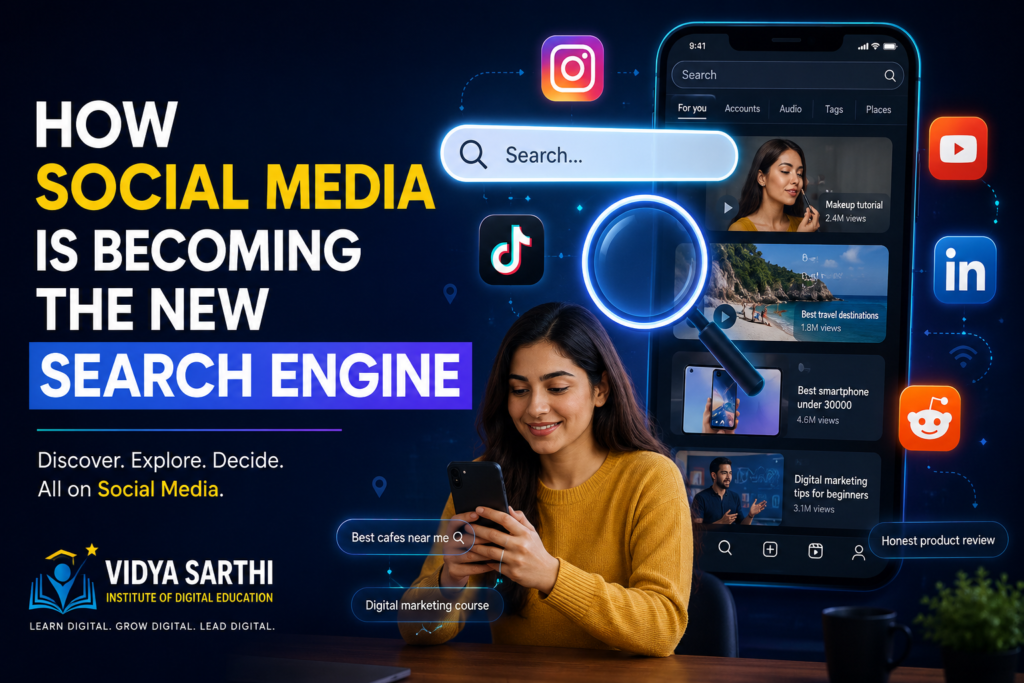
The way people search for information is changing.
For years, search engines were the starting point for almost every online query. Someone looking for a restaurant would search on Google. Someone wanting to learn digital marketing would search for blogs or websites. Someone planning a purchase would type the product name into a search engine and compare results.
But today, people are using social media differently.
They are searching Instagram for fashion ideas, YouTube for tutorials, TikTok for product recommendations, LinkedIn for career and business insights, and Reddit for honest opinions and real user experiences.
This means social media is slowly becoming more than a platform for entertainment and communication. It is becoming a new form of search engine.
For businesses, this change means that traditional SEO alone may not be enough. Brands also need to understand social search and create content that can be discovered naturally within social platforms.
Summary
Search behaviour is changing rapidly. Earlier, when people wanted to discover a product, learn something new, find a restaurant, or research a service, Google was usually the first place they went. Today, platforms like Instagram, YouTube, TikTok, LinkedIn, and even Reddit are becoming important discovery platforms. People are searching directly on social media because they want real experiences, visual content, recommendations, reviews, and quick answers.
This shift is creating a major opportunity for brands and digital marketers. Being visible on social media is no longer only about gaining followers or likes. It is increasingly about appearing when people are actively searching for information, products, services, and solutions.
1. People Are Searching Where They Already Spend Their Time
One of the biggest reasons social media is becoming a search destination is convenience.
People already spend significant amounts of time on platforms such as Instagram, YouTube, TikTok, LinkedIn, and Reddit. Instead of leaving these platforms and opening a traditional search engine, they can simply search within the platform.
For example, someone interested in digital marketing may search YouTube for “performance marketing strategy” or Instagram for “digital marketing tips.”
The search and content experience happen in the same place.
This makes social platforms extremely powerful for discovery.
2. Visual Search Is Changing User Behaviour
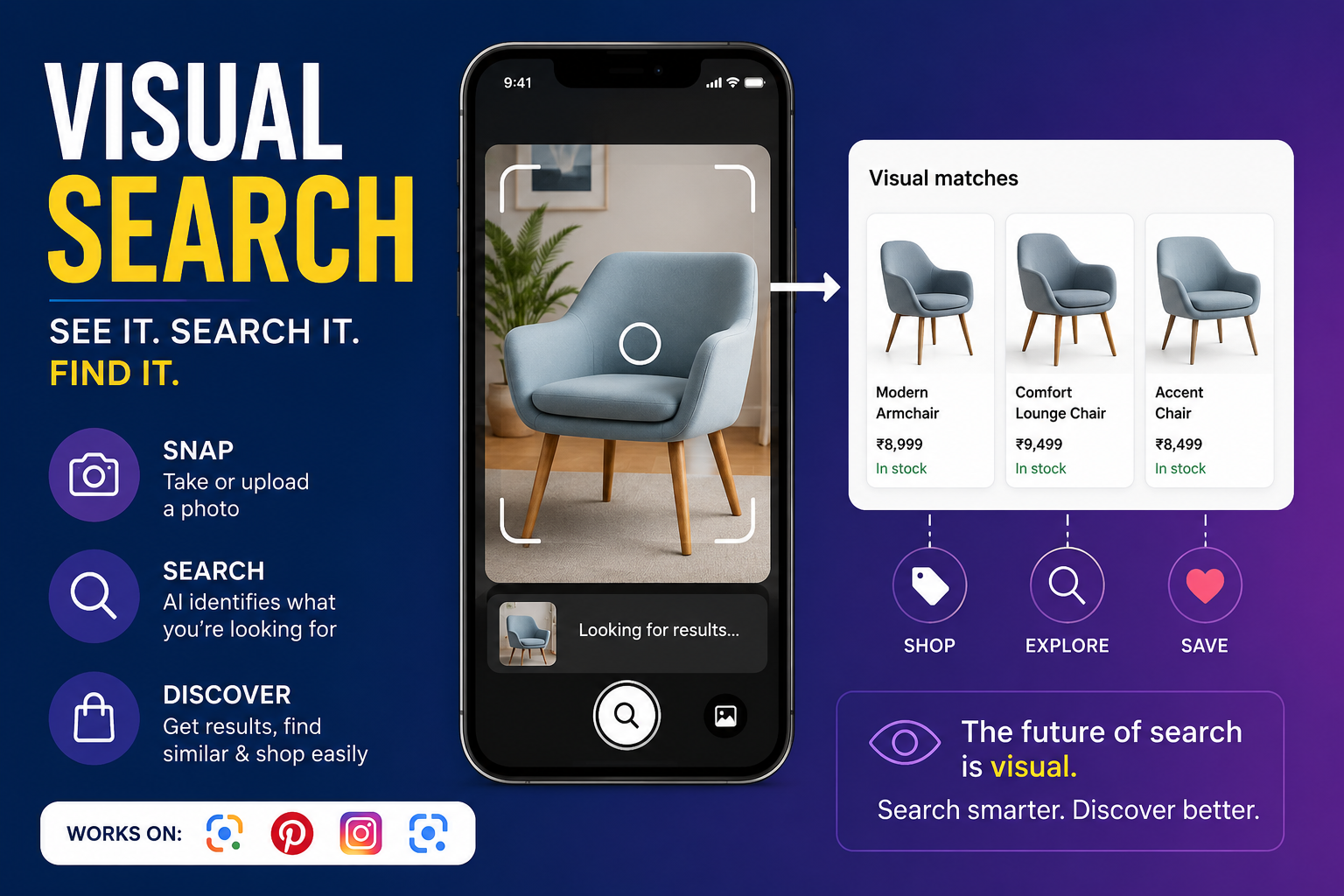
Traditional search engines primarily provide links and text-based information. Social media provides something different: visual answers.
If someone wants to learn how to style an outfit, prepare a recipe, use a software tool, or understand a marketing strategy, a video or carousel can often explain the topic faster than a long webpage.
Platforms such as YouTube, Instagram, and TikTok are particularly strong because users can discover information through short videos, tutorials, demonstrations, reels, and visual guides.
This is why brands need to think beyond written content.
A blog may answer a question, but a 30-second video can demonstrate the answer.
3. Social Search Feels More Personal
Another major advantage of social media search is the human element.
When people search for a product or service on social media, they can often find content created by real customers, creators, professionals, or communities.
For example, before purchasing a product, users may search for:
Product reviews
Unboxing videos
Customer experiences
Before-and-after results
Tutorials
Comparisons
Expert opinions
This type of content can feel more authentic than traditional advertising.
People increasingly want to know what others actually experienced, not just what a brand claims about itself.
4. YouTube Is Becoming a Major Search Platform
YouTube is one of the clearest examples of social media becoming search-driven.
People use YouTube to search for everything from educational content and technology reviews to fitness tutorials, career advice, business strategies, and product demonstrations.
For brands and creators, this means video content needs to be searchable.
Using relevant keywords in video titles, descriptions, captions, topics, and spoken content can help users discover videos when they are actively looking for answers.
A good YouTube video is therefore not just content. It can also become a searchable resource.
5. Instagram Search Is Becoming More Important
Instagram is no longer only about photos and followers.
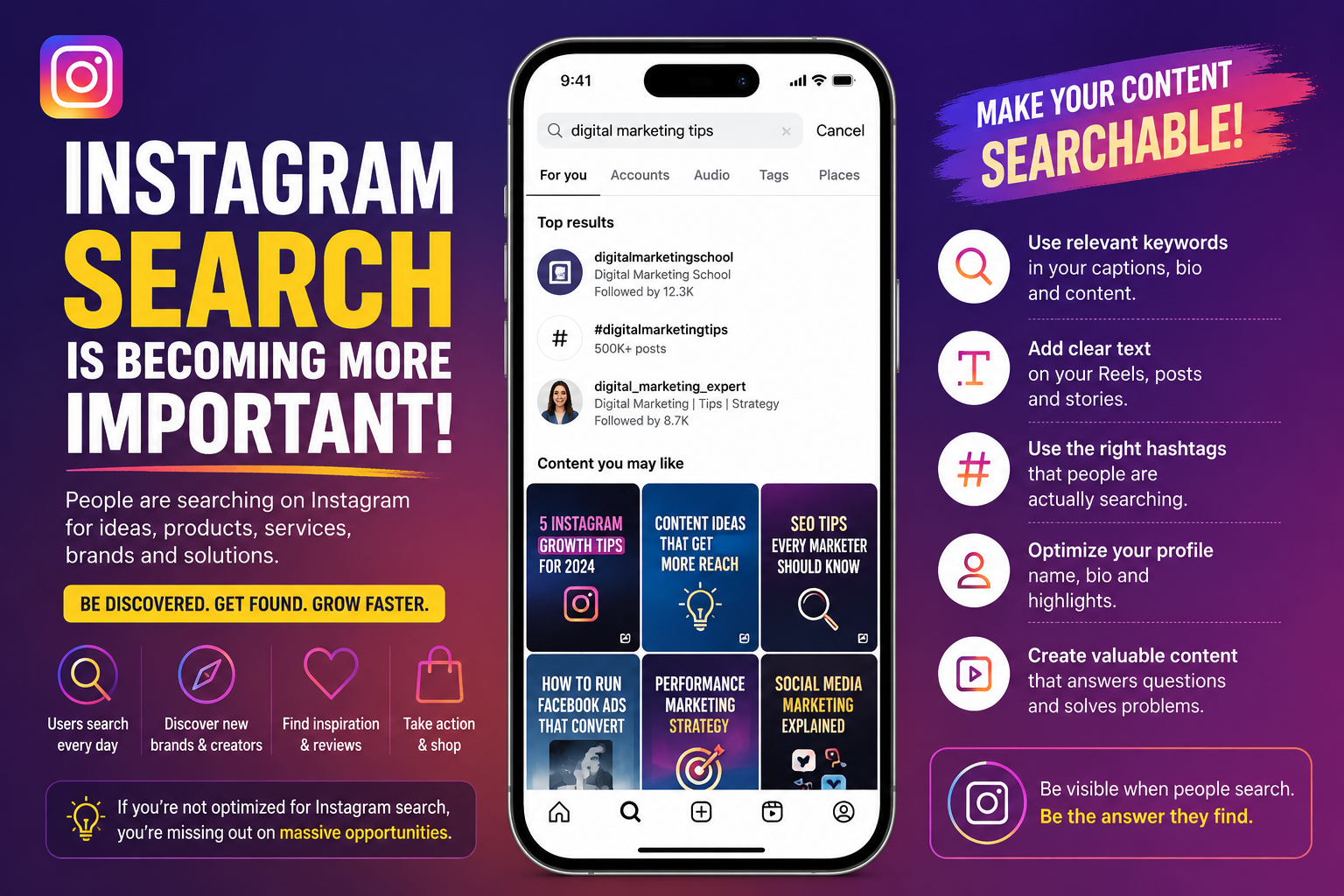
Users increasingly search Instagram for businesses, products, services, trends, locations, creators, and educational content.
This means businesses need to make their Instagram profiles and content easy to understand.
Using relevant keywords in captions, profile descriptions, content topics, and on-screen text can help platforms understand what the content is about.
For example, a digital marketing institute should not depend only on hashtags such as #DigitalMarketing. Its content should clearly communicate topics such as SEO, social media marketing, performance marketing, Google Ads, content marketing, and career opportunities.
The clearer the content, the easier it becomes for both users and platforms to understand it.
6. TikTok and Short-Form Video Are Changing Discovery
Short-form video has changed how people discover information.
Users can discover a creator, business, product, or idea without actively following that account. The algorithm can introduce relevant content based on interests and behaviour.
This creates a powerful combination of search + recommendation + discovery.
Someone may search for “best digital marketing skills” and then discover several creators discussing the topic. Another person may simply watch marketing-related videos and eventually discover an educational institute.
This means brands need content that can work in both situations:
Content that answers searches and content that creates discovery.
7. Reddit and Communities Are Becoming Research Hubs
Social search is not limited to visual platforms.
Community-driven platforms are also becoming important sources of information. People often use online communities to ask questions and find opinions from people who have personal experience with a particular product, service, career, or problem.
This is especially important because users often trust genuine discussions.
For brands, the lesson is simple: digital presence should not only focus on promotion. Providing useful information and becoming part of relevant conversations can also influence how people discover and evaluate a brand.
8. Social SEO Is Becoming a New Digital Marketing Skill
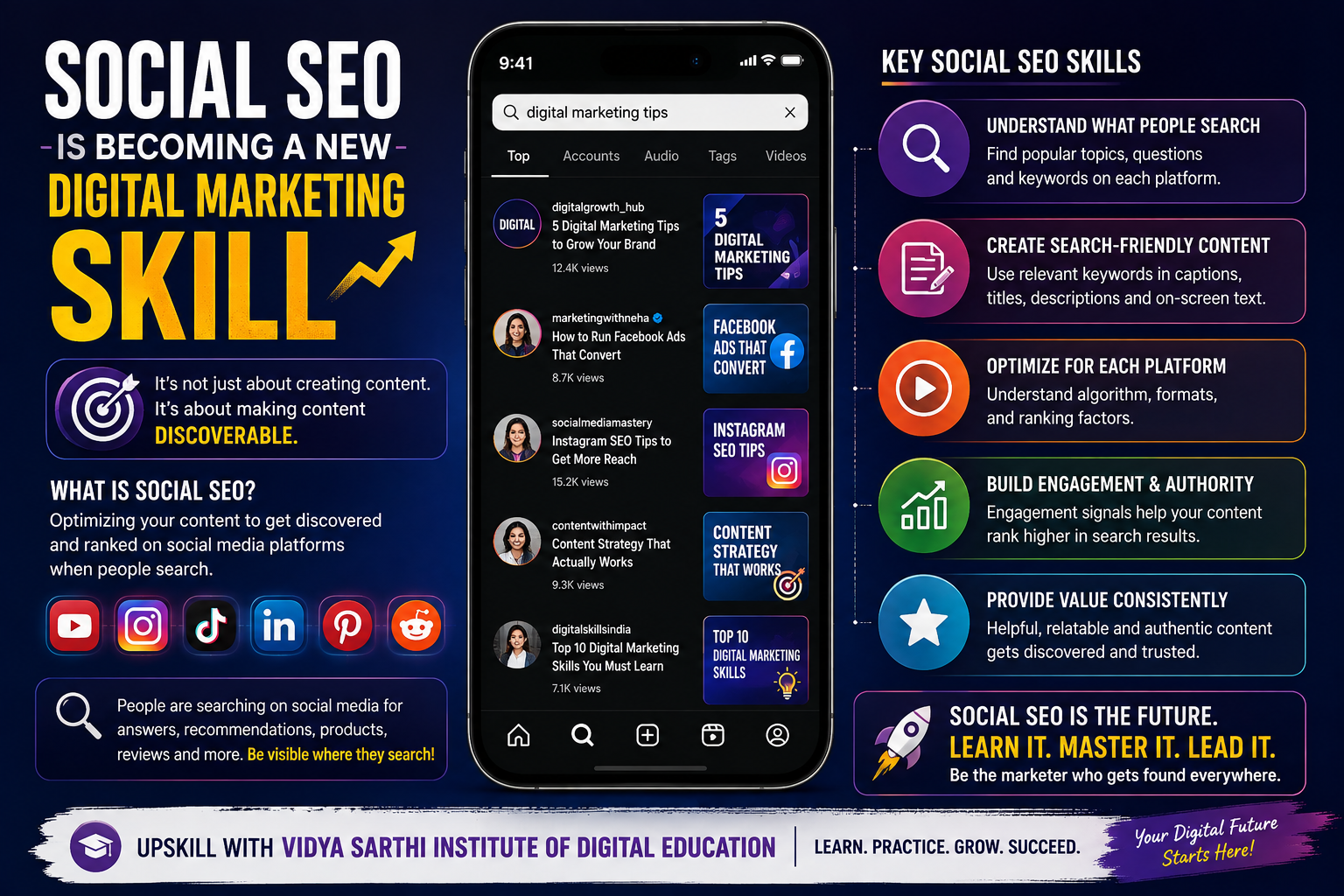
As social platforms become search destinations, social SEO is becoming increasingly important.
Traditional SEO focuses heavily on ranking webpages in search engines. Social SEO focuses on making content discoverable within social platforms.
This includes:
Understanding what users search for
Using relevant keywords naturally
Creating content around specific questions
Optimising captions and descriptions
Using searchable titles
Adding relevant on-screen text
Creating useful and informative content
Understanding platform-specific algorithms
Building authority and engagement
The goal is not simply to create content.
The goal is to create content that people can find, understand, trust, and act on.
9. What This Means for Businesses
Businesses need to rethink their digital marketing strategy.
Having a website is still important. Traditional search engines are still extremely valuable. SEO is not disappearing.
Instead, the search ecosystem is expanding.
A customer may discover a business through Instagram, watch its YouTube video, read reviews on another platform, visit its website, and finally make a purchase.
The customer journey is becoming more connected across platforms.
Businesses therefore need to maintain consistency across their website, social media profiles, videos, reviews, and other digital touchpoints.
10. The Future Is Search Everywhere
The biggest change is that search is no longer restricted to one platform.
People search wherever they believe they will get the best answer.
Google may be better for certain informational queries. YouTube may be better for tutorials. Instagram may be better for visual inspiration. Reddit may be better for community opinions. LinkedIn may be better for professional insights.
This creates a new mindset for digital marketers:
Don’t just ask, “How do we rank on Google?” Ask, “Where is our audience searching?”
Once marketers understand that question, their content strategy becomes much more powerful.
Conclusion
Social media is becoming the new search engine because user behaviour is changing.
People want faster answers, visual explanations, authentic experiences, expert opinions, and recommendations from real people. Platforms such as YouTube, Instagram, TikTok, LinkedIn, and Reddit are increasingly meeting these needs.
For businesses, this means social media should not be treated only as a place to post content. It should be treated as a search and discovery ecosystem.
The future of digital marketing will belong to brands that understand how people search across platforms and create content that is useful enough to be discovered, trusted, and remembered.
The question is no longer whether people are searching on social media.
They already are. The real question is: Can they find your brand when they do?
At Vidya Sarthi Institute of Digital Education, we help aspiring digital marketers understand the changing digital landscape and build practical skills for the future of marketing. Start learning today and prepare yourself for the next generation of digital marketing.