Introduction
In today’s digital world, businesses have many ways to connect with their audience. Social media, search engines, websites, paid advertising, and content marketing all play an important role. However, one channel that continues to remain valuable is email marketing.
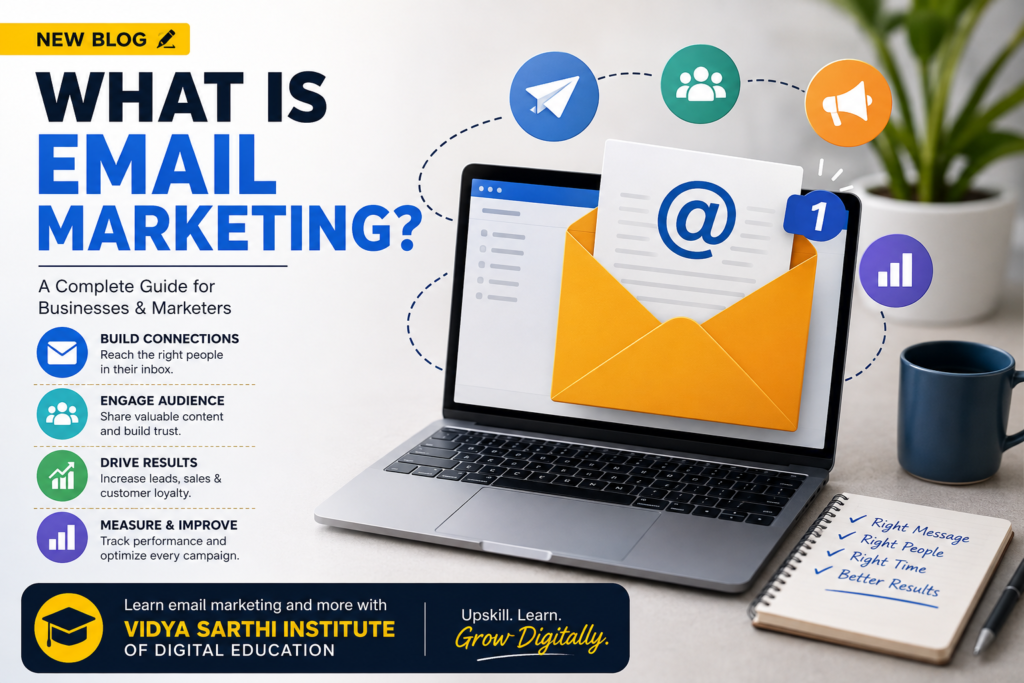
Email marketing is the process of using emails to communicate with customers, prospects, and subscribers. Businesses use it to share information, promote products or services, build relationships, generate leads, and encourage repeat purchases.
Unlike social media, where businesses depend heavily on changing algorithms, email gives brands a more direct way to reach people who have chosen to hear from them. A well-planned email can reach the right audience at the right time with a relevant message.
For digital marketers, understanding email marketing is an important skill because it combines content, customer psychology, data, automation, and conversion strategies.
Summary
Email marketing is a digital marketing strategy where businesses communicate with their audience through email. It can be used for different purposes, including generating leads, promoting offers, nurturing prospects, sharing valuable content, increasing sales, and building customer loyalty.
Successful email marketing is not simply about sending promotional messages. It is about sending relevant, useful, and personalized content to the right people at the right time.
With email automation, segmentation, personalization, and performance tracking, marketers can create campaigns that are more targeted and measurable. This makes email marketing an important part of a modern digital marketing strategy.
What Is Email Marketing?
Email marketing refers to sending targeted emails to a group of people who have subscribed to receive communication from a business, organization, or brand.
These emails can include newsletters, promotional offers, product updates, educational content, event invitations, welcome messages, and more.
For example, when you sign up for a company’s newsletter and receive a welcome email, followed by useful tips and occasional offers, you are experiencing email marketing.
The main goal is not always an immediate sale. Email marketing can also help a business build trust and maintain a long-term relationship with its audience.
Why Is Email Marketing Important?
Email marketing is important because it provides businesses with a direct communication channel.
A social media post may not reach every follower because of platform algorithms. An email, however, can be delivered directly to a subscriber’s inbox.
Some major benefits of email marketing include:
1. Direct communication:
Businesses can communicate directly with people who have shown interest in their brand.
2. Lead generation:
Email campaigns can help businesses turn website visitors and prospects into potential customers.
3. Customer engagement:
Regular and useful emails keep a brand connected with its audience.
4. Sales and conversions:
Businesses can use emails to promote products, services, offers, and special campaigns.
5. Customer retention:
Email can help businesses stay connected with existing customers and encourage repeat purchases.
6. Measurable performance:
Marketers can track metrics such as open rates, click-through rates, conversions, and unsubscribes to understand campaign performance.
Types of Email Marketing
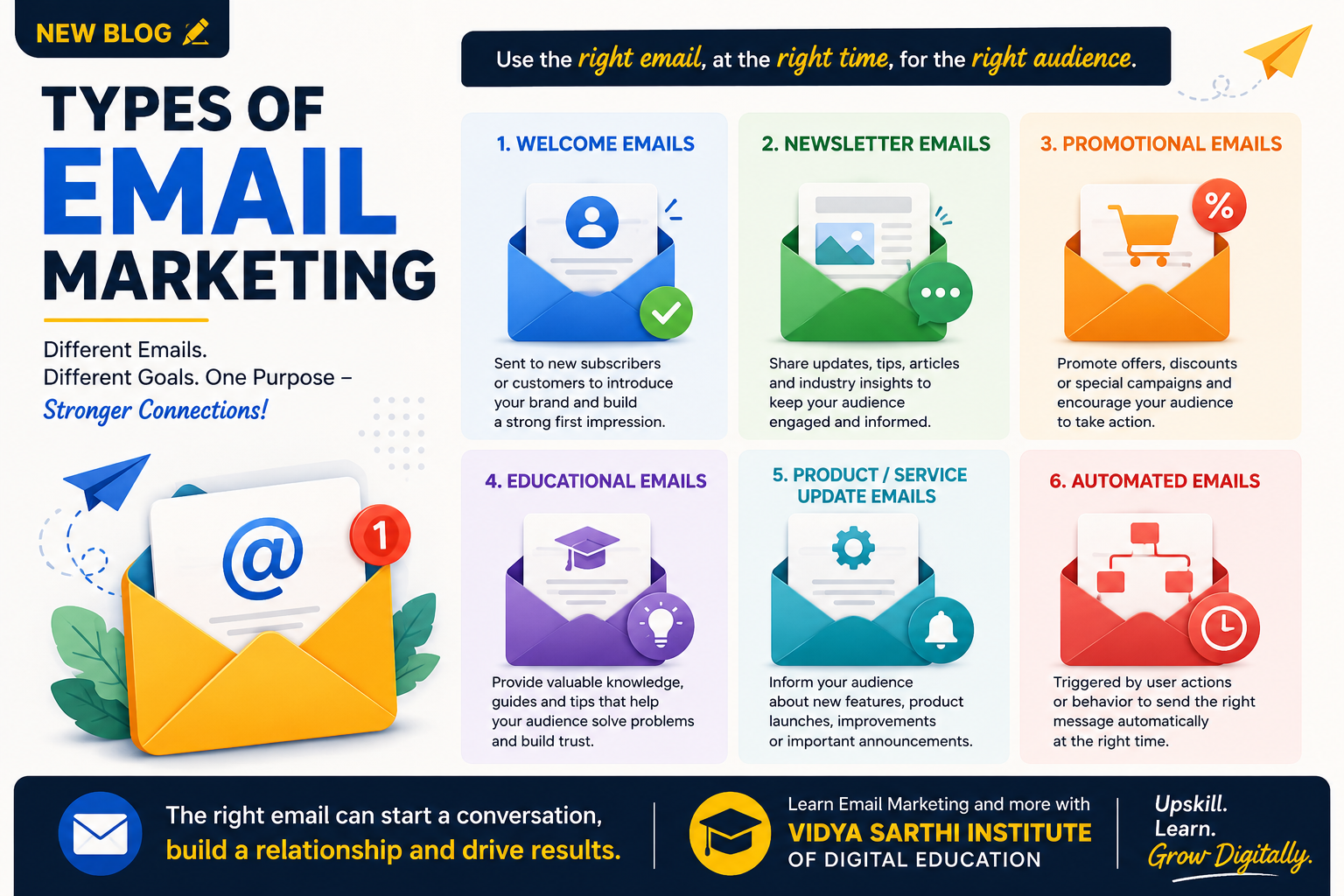
Email marketing is not limited to promotional emails. Different types of emails serve different purposes.
1. Welcome Emails
A welcome email is usually sent when someone subscribes to a newsletter, creates an account, or joins a mailing list.
It introduces the brand and helps create a positive first impression.
2. Newsletter Emails
Newsletters are regularly sent emails containing useful information, updates, articles, tips, or industry insights.
They are particularly useful for building long-term relationships with subscribers.
3. Promotional Emails
Promotional emails are designed to encourage an action such as purchasing a product, registering for an event, or taking advantage of a special offer.
4. Educational Emails
These emails focus on providing value rather than directly selling something. Businesses can share guides, tips, tutorials, industry information, and helpful resources.
Educational emails can help establish credibility and trust.
5. Product or Service Updates
Businesses can use emails to inform customers about new products, features, services, improvements, or important announcements.
6. Automated Emails
Automation allows marketers to send emails based on specific actions or conditions.
For example, a business can automatically send a welcome email after signup or a reminder email when someone leaves items in an online shopping cart.
How Does Email Marketing Work?
A successful email marketing campaign generally follows a simple process.
Step 1: Build an Email List
The first step is developing a list of people who have willingly provided their email addresses.
Businesses can collect subscribers through websites, landing pages, forms, registrations, downloadable resources, and other lead-generation activities.
Step 2: Understand the Audience
Knowing who your subscribers are is important. Their interests, needs, behavior, and stage in the customer journey can influence what type of email they should receive.
Step 3: Segment the Audience
Instead of sending the same message to everyone, marketers can divide subscribers into smaller groups.
For example, customers, new subscribers, inactive users, and people interested in a particular product can receive different messages.
Step 4: Create Valuable Content
The email should have a clear purpose and provide something useful or relevant to the reader.
A good subject line can encourage people to open the email, while strong content and a clear call-to-action can encourage them to take the next step.
Step 5: Send the Campaign
The campaign can be sent manually or through an email marketing platform. Automation can also be used for specific customer actions.
Step 6: Measure the Results
After sending an email, marketers analyze performance. This helps them understand what worked and what needs improvement.
Important Email Marketing Metrics
Data plays an important role in email marketing. Some common metrics include:
Open Rate: The percentage of recipients who open an email.
Click-Through Rate (CTR): The percentage of recipients who click on a link or call-to-action within the email.
Conversion Rate: The percentage of recipients who complete the desired action.
Bounce Rate: The percentage of emails that could not be delivered.
Unsubscribe Rate: The percentage of subscribers who choose to stop receiving emails.
These metrics help marketers make data-driven decisions and improve future campaigns.
What Makes an Email Marketing Campaign Successful?
Sending frequent emails does not automatically create successful email marketing. The quality and relevance of the communication matter.
A strong campaign usually focuses on:
– A clear and engaging subject line
– Relevant and useful content
– Personalization
– A clear call-to-action
– Mobile-friendly design
– Proper audience segmentation
– Consistent communication
– Performance tracking and optimization
The most important principle is to focus on the subscriber, not just the business.
People are more likely to engage with emails that solve a problem, answer a question, provide useful information, or offer something genuinely relevant to them.
Email Marketing and Digital Marketing
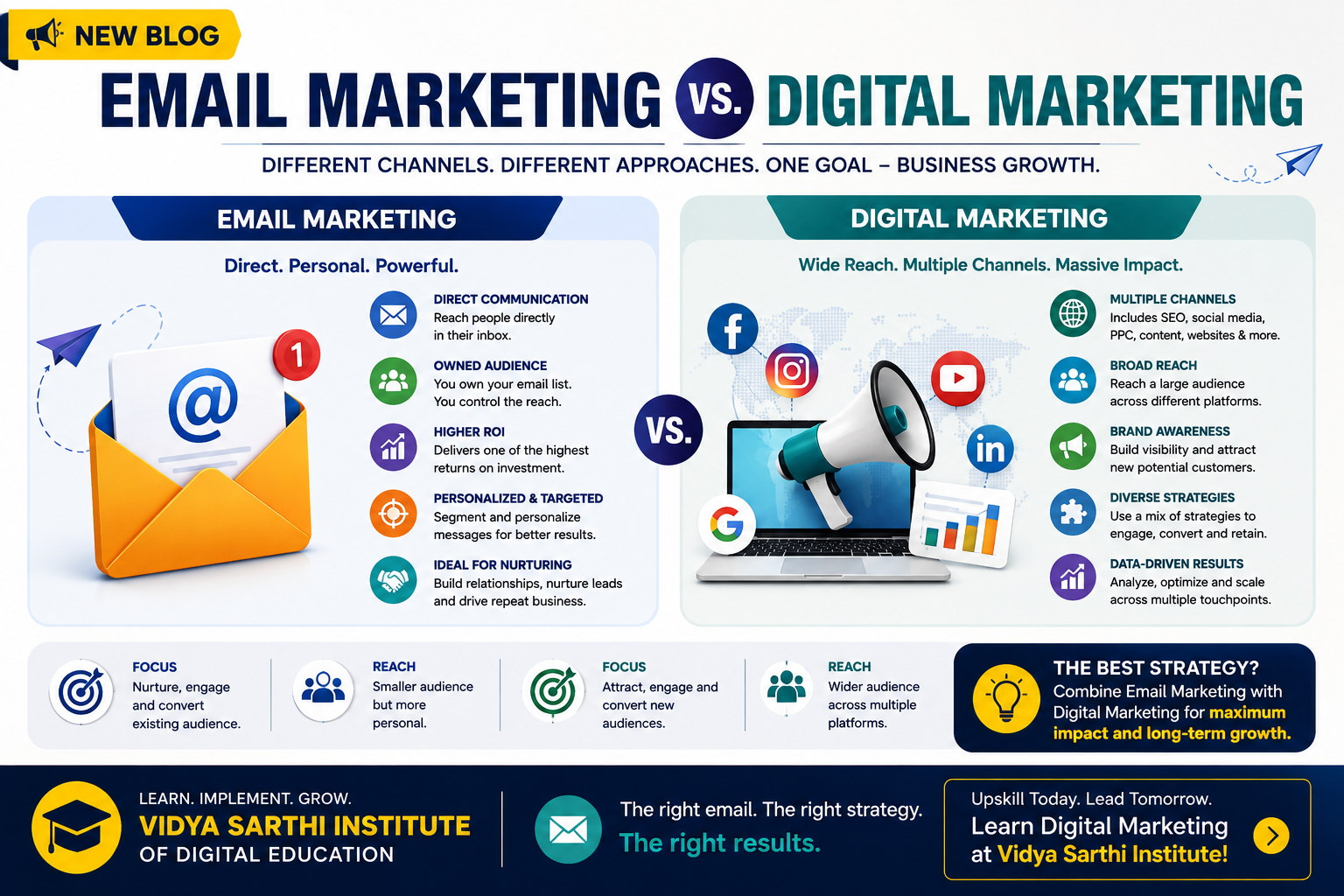
Email marketing works especially well when combined with other digital marketing channels.
For example, a business can use SEO to attract visitors to its website, offer a useful resource in exchange for an email signup, and then use email marketing to nurture those leads.
Similarly, social media can attract an audience, while email can provide a more direct and personalized communication channel.
This makes email marketing an important part of a complete digital marketing strategy.
The Future of Email Marketing
Email marketing continues to evolve with technology. Personalization, automation, artificial intelligence, customer segmentation, and behavioral data are making email campaigns more targeted.
Instead of sending one generic email to thousands of people, marketers can create different messages based on customer interests and actions.
AI can also help marketers with tasks such as generating content ideas, analyzing customer behavior, testing subject lines, and improving campaign personalization.
However, technology alone cannot make an email successful. Understanding the audience and creating meaningful communication will continue to be essential.
Conclusion
Email marketing is much more than sending promotional messages to a list of subscribers. It is a powerful digital marketing strategy for building relationships, nurturing leads, engaging customers, and driving conversions.
When businesses combine relevant content, personalization, segmentation, automation, and data analysis, email marketing can become a valuable part of their overall marketing strategy.
For aspiring digital marketers, learning email marketing can open opportunities to work across different areas of digital marketing and understand how businesses communicate with customers throughout the marketing funnel.
Want to build practical digital marketing skills? Join Vidya Sarthi Institute of Digital Education and learn email marketing and other essential digital marketing skills with industry-focused training.